


Why communities.
Why wildlife.
Why Zambia.
When the people who live alongside Africa's great wildlife areas have a genuine reason to protect what is around them — water, income, schools, roads, healthcare — they do. When they do not, no fence or patrol changes the outcome. ZWCF was founded on this principle. We work in the Luangwa Valley, the Kafue ecosystem, and North Luangwa, in communities where our founders have direct operations, established relationships, and personal oversight of how every program is delivered. Stronger communities mean more wildlife. That is not a slogan — it is the only conservation model that has ever worked at scale in Africa.
- WHAT WE DO
Six programs. One Purpose.
Every program the Zambia Wildlife and Community Foundation funds reduces the pressure on wildlife by improving the lives of the people who live alongside it.

Anti-Poaching & Scout Support
Scout salaries, housing, K-9 units, and informant networks. The transport, food, and gear needed for successful patrols and raids. Local scouts, given the power to secure their own land.
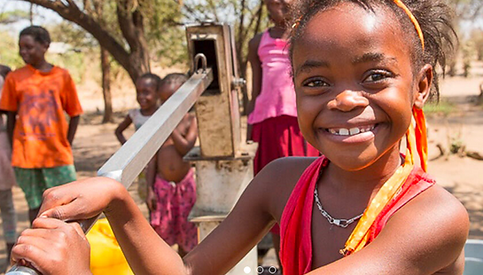
Clean Water
Our own drilling rig brings clean water to remote villages and creates wildlife water holes across the valley. Water for people. Water for wildlife. One rig, permanent solutions for both.

Education & Schools
Teacher housing, girls' dormitories, school supplies, and the Nakaluma Game Scout School. Investing in the generation that will determine whether this landscape survives the next fifty years.

Roads & Infrastructure
63 miles of road maintained annually. 3 airstrips kept operational. Connecting communities to markets, schools, and emergency care.

Food, Clothing & Healthcare
We don't send aid — we deliver it. Emergency food, malaria treatments, and bales of clothing brought directly to villages. A steady, physical presence for communities facing the hardest trials.

Natural Resource Management
Addressing deforestation, uncontrolled fire, and land misuse. Working with smallholder farmers on sustainable land use, fire management, and wildlife monitoring. Over 1.3M acres under influence.

- IN THE FIELD
Zambia’s First Conservation K9 Unit, and Why It Matters
In South Luangwa, the war against illegal wildlife crime is fought on the ground, in the bush, at roadblocks, and at the gates of community villages. Conservation South Luangwa’s K9 Unit — Zambia’s first and only conservation dog unit — is one of the most effective tools in that fight.
Founded in 2014, the unit operates nine handlers and four trained dogs in direct partnership with DNPW. The dogs are trained to detect firearms, bushmeat, ivory, leopard and lion skins, pangolin scales, and illegally trafficked timber. Working alongside CSL’s aerial and ground patrol units, the K9 team conducts vehicle searches, property searches, and targeted operations across the valley. In 2025, the unit contributed to 21% of all wildlife crime arrests, 38% of confiscations, and 13% of bushmeat seizures in the entire South Luangwa ecosystem.
30%
Wildlife Crime Arrests
38%
Confiscations
13%
Bushmeat Seizures
“Thank you once again for your support towards conservation in South Luangwa and we look forward to strengthening our partnership in future.”
Rachel McRobb - CEO, Conservation South Luangwa
- WHERE WE WORK
Three regions. Three of Zambia's most important wildlife landscapes.
ZWCF operates only where its founders have established operations, earned community trust, and built partnerships. Direct oversight is not a talking point — it is the operational model.
01
South Luangwa
Lupande GMA · Mwanya Chiefdom · Chibembe Reserve
The birthplace of the walking safari. Home to Africa's highest leopard densities, vast elephant herds, and the endemic Thornicroft's giraffe. ZWCF's deepest presence — across the GMA, the chiefdom, and 3,500-acre Chibembe Wildlife Reserve.
PARTNERS
Conservation South Luangwa · Zambia Carnivore Program · Giraffe Conservation Foundation · Frankfurt Zoological Society · DNPW · The Bushcamp Company
02
Greater Kafue
Mumbwa Game Management Area
Africa's third largest national park at 22,400 km². ZWCF operates in the Mumbwa GMA on Kafue's eastern boundary — a critical buffer zone where community relationships determine the health of wildlife inside the park.
PARTNERS
Musekese Conservation · Zambia Carnivore Program · DNPW
03
North Luangwa
Chifunda Game Management Area
One of Africa's most remote wildernesses and a key site for black rhino reintroduction and wild dog recovery. ZWCF operates in the Chifunda GMA — protecting some of the continent's most endangered wildlife.
PARTNERS
Frankfurt Zoological Society · Zambia Carnivore Program · DNPW

⭐ Project Areas — South Luangwa · Greater Kafue · North Luangwa
- HOW WE DELIVER
The equipment is already in the valley.
Most foundations fund this vision, then spend years building the capacity to deliver it. ZWCF's founders already own the equipment, employ the staff, and operate the logistics network. Donor dollars go to programs — not to establishing a presence that already exists.

Anti-Poaching Operations
Scouts remove wire snares from the field during patrols. Local scouts, given the power to secure their own land.

Bore Hole Drilling Rig
Shipped from the United States. Drills community water bore holes and wildlife water sources across the entire Luangwa Valley.

Road Grader
63 miles maintained annually. 3 airstrips kept operational.

Military Trucks & Land Cruisers
Military-grade trucks reach the most remote areas — critical during the rainy season when roads become impassable. Supported by a fleet of Land Cruisers that serve safari operations and community programs valley-wide.

300+ Zambian Staff
Local employment, community relationships, local accountability.

Working Farm
Direct employment and fresh produce for camp kitchens in the buffer zones.
85,000+
Community Members
in Our GMAs
300+
Zambian Staff
3
Focus Regions
10
Partners
The operational infrastructure behind ZWCF's programs has been built over twenty-five years of operating in the Luangwa Valley and Kafue ecosystem. Donor funds go to programs — not to establishing a presence that already exists.
$2M
Personal Founding Commitment
1.3M
Acres Under Influence
85,000+
Community Members in Our GMAs
200
People
2026 CAPITAL CAMPAIGN
$10,000,000
2026 CAPITAL CAMPAIGN

Reaching our capital campaign target will endow the foundation — enabling it to meet its annual program budget without continuous fundraising, and sustain this work in the game management areas permanently.